



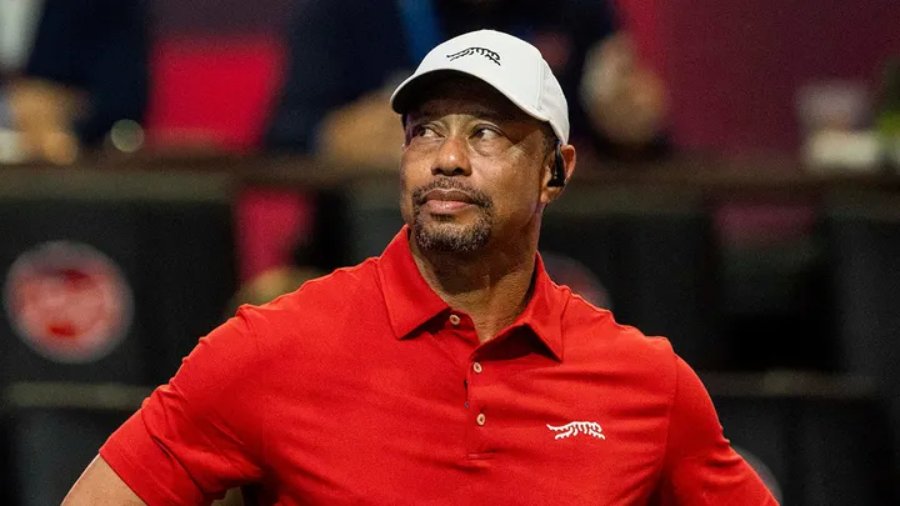
For four days after his arrest, Tiger Woods said nothing. On Monday, he spoke — and confirmed what many in the golf world had feared.
The 15-time major champion announced he is withdrawing from competitive golf for an unspecified period to pursue treatment and address his health, in the wake of a March 27 DUI arrest following a rollover crash in Jupiter Island, Florida. The statement, posted directly to social media, was the first public communication from Woods since law enforcement booked him into the Martin County Jail.
“I know and understand the seriousness of the situation I find myself in today,” Woods wrote. “I am stepping away for a period of time to seek treatment and focus on my health. This is necessary in order for me to prioritize my well-being and work toward lasting recovery.”
He added that he is “committed to taking the time needed to return in a healthier, stronger, and more focused place, both personally and professionally,” and asked for privacy for his family and loved ones.
While Woods’ statement was measured and forward-looking, the details contained in the arrest affidavit obtained by Fox News Digital paint a stark picture of what unfolded on the road that Friday.
Deputies with the Martin County Sheriff’s Office responding to the crash documented multiple visible signs of impairment. They noted that Woods was “sweating profusely,” that his movements appeared “lethargic and slow,” and that his eyes were “bloodshot and glassy” as well as “extremely dilated” once his sunglasses were removed.
Woods himself provided a critical piece of the account — admitting to deputies that he had been distracted in the moments before the collision.
“Woods stated he was looking down at his cell phone and changing the radio station and did not notice the vehicle in front of him slowing down,” deputies wrote in the affidavit.
Following his arrest, authorities discovered two white pills inside the left pocket of his pants. The pills were subsequently identified as hydrocodone — a prescription opioid pain reliever.
At the jail, Woods submitted to a breathalyzer test and registered 0.00 on both samples, ruling out alcohol entirely. He declined to provide a urine sample, however — a refusal that resulted in an additional charge.
The Charges He Now Faces
Woods is facing three charges, all classified as misdemeanors: driving under the influence with property damage, and refusal to submit to a blood alcohol level test. He has entered a plea of not guilty, formally waived his arraignment, and requested a jury trial.
His attorney, Douglas N. Duncan, did not respond to Fox News Digital’s request for comment.
This is not the first time Woods has faced legal consequences tied to prescription drug use behind the wheel.
In 2017, he was found asleep at the wheel of a running vehicle at 3 a.m. on Jupiter Island — the same stretch of Florida where Friday’s crash occurred. Prescription drugs were determined to be a factor in that incident as well.
Two years later, in 2021, Woods was involved in a separate, far more severe rollover crash that caused serious leg injuries requiring emergency surgeries — injuries he referenced during field sobriety testing at the scene of last week’s arrest.
The surgeries that followed that 2021 accident, along with subsequent procedures on his back and repairs to a torn Achilles, kept him almost entirely off competitive golf for years. His appearance at The Golf League earlier this month represented his first competitive return — a comeback now interrupted before it truly began.
The Masters — and Beyond
The timing of the arrest and announcement carries particular weight in the golf calendar.
Woods had reportedly been working toward competing in the Masters Tournament at Augusta National — an event he has won five times and one whose emotional pull on him has never diminished. His statement Monday confirmed he will not be in this year’s field.
TGL teammate Kevin Kisner had previously indicated that Woods also registered for the U.S. Senior Open, scheduled for early July. Whether that appearance remains a possibility will depend entirely on the timeline of his treatment and recovery.
Tiger Woods has faced setbacks before — injuries, personal crises, years away from the sport — and has returned each time. Whether this departure follows that same arc remains genuinely uncertain. What his statement makes clear is that he is aware of the gravity of what has happened and is choosing, at least for now, to prioritize his health over competition. The golf world has watched Woods fight back from the edge before. The question now is not whether he wants to return — it is whether his body, and his recovery, will allow it.
