



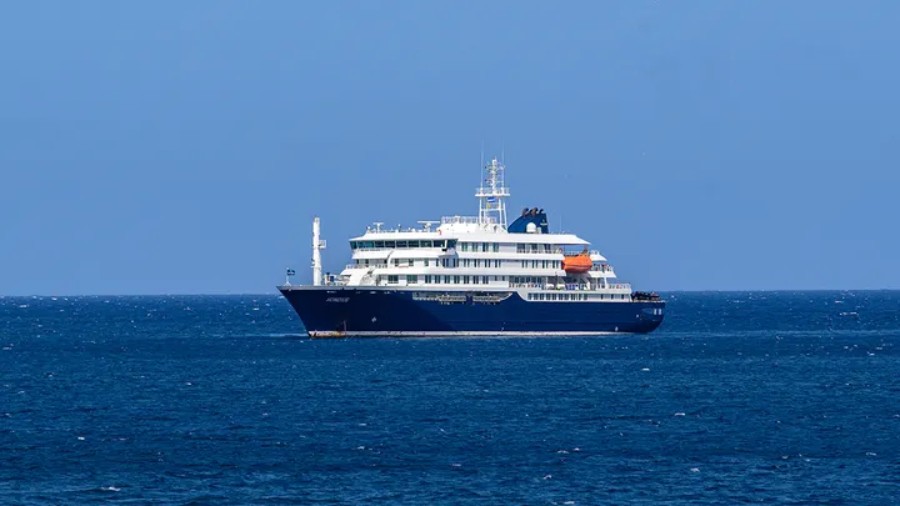
A suspected hantavirus outbreak aboard a cruise ship sailing the Atlantic Ocean off the coast of West Africa has killed three people and left several others gravely ill — while a standoff over disembarkation approvals has complicated the urgent effort to evacuate those who need immediate care on land.
The World Health Organization confirmed the situation in a statement posted to X, describing an ongoing and rapidly developing public health response coordinated across multiple countries and agencies.
Of the six individuals currently identified as affected aboard the MV Hondius, the WHO has confirmed one laboratory-verified case of hantavirus infection. Five additional suspected cases remain pending as laboratory testing and broader epidemiological investigations continue.
Three of the six people affected have died. One patient is currently receiving treatment in an intensive care unit in Johannesburg, South Africa. The WHO said it is actively working to arrange the medical evacuation of two symptomatic individuals who remain on board the ship, while continuing to assess the overall public health risk to the rest of those still at sea.
“Detailed investigations are ongoing, including further laboratory testing, and epidemiological investigations,” the WHO said. “Medical care and support are being provided to passengers and crew. Sequencing of the virus is also ongoing.”
The WHO also noted a specific concern about transmission that will be closely monitored as the investigation develops.
“While rare, hantavirus may spread between people, and can lead to severe respiratory illness and requires careful patient monitoring, support and response,” the agency said.
The Ship, the Operator, and the Standoff at Cape Verde
The MV Hondius is a Dutch-flagged expedition cruise ship operated by Oceanwide Expeditions. It has been stationary off the port of Praia, Cape Verde — a position that should, in theory, allow for the rapid transfer of symptomatic patients to shore-based medical facilities.
In practice, that transfer has not happened.
Cape Verde authorities have not yet authorized the disembarkation of passengers requiring medical treatment or broader medical screening. Local health officials have boarded the vessel to assess conditions — but as of late Sunday, had not granted approval for symptomatic individuals to be moved to facilities on land.
Two crew members on board also require urgent medical attention, according to Oceanwide Expeditions, compounding the pressure on an already difficult situation.
“The priority of Oceanwide Expeditions is to ensure that the two symptomatic individuals on board receive adequate and expedited medical care,” the company said in a statement.
Dutch authorities are working in parallel to coordinate the repatriation of affected individuals from Cape Verde to the Netherlands — but that effort, too, depends on approval from local officials, creating a logistical bottleneck at the worst possible moment.
“We are currently establishing the full facts and working on appropriate medical care, screening, and next steps,” Oceanwide Expeditions said.
Understanding Hantavirus
Hantavirus is a family of viruses typically carried by rodents. Human infection most commonly occurs through contact with infected rodent urine, feces, or saliva — or through inhalation of particles contaminated with those materials. The virus is not considered easily transmissible between people, but the WHO’s specific acknowledgment that person-to-person spread is possible, though rare, adds an important layer of concern in the contained environment of a ship.
The illness can progress to hantavirus pulmonary syndrome — a severe, potentially fatal respiratory condition — or hemorrhagic fever with renal syndrome, depending on the specific strain involved.
There is no approved antiviral treatment specifically for hantavirus. Management depends on early recognition, supportive care, and close monitoring. Early intervention has been shown to improve survival odds, making the delays in getting patients to shore-based care all the more consequential.
The virus gained significant public attention in 2025 following the death of actress Betsy Arakawa, the wife of actor Gene Hackman, whose home was subsequently found to be infested with rodents.
WHO Alerts Global Health Authorities
The WHO said it has formally notified global health authorities of the situation under International Health Regulations — the standard mechanism for flagging events that may constitute a public health risk beyond the borders of a single nation.
The agency said it continues to actively support the response and is in ongoing coordination with the governments involved and the ship’s operator.
“We are continuing to assess the public health risk to those still on board,” the WHO said.
The MV Hondius is carrying people who need urgent medical care and has been sitting off the coast of Cape Verde while the bureaucratic and diplomatic work of getting them ashore continues. Three people are already dead. One is in intensive care in Johannesburg. Two crew members need treatment. The WHO is involved. Dutch authorities are working the problem from their end. And Cape Verde has not yet given the word to let anyone off the ship. The situation is evolving quickly — and every hour of delay carries consequences that the living aboard the vessel can measure in ways that the official statements cannot fully convey.
