



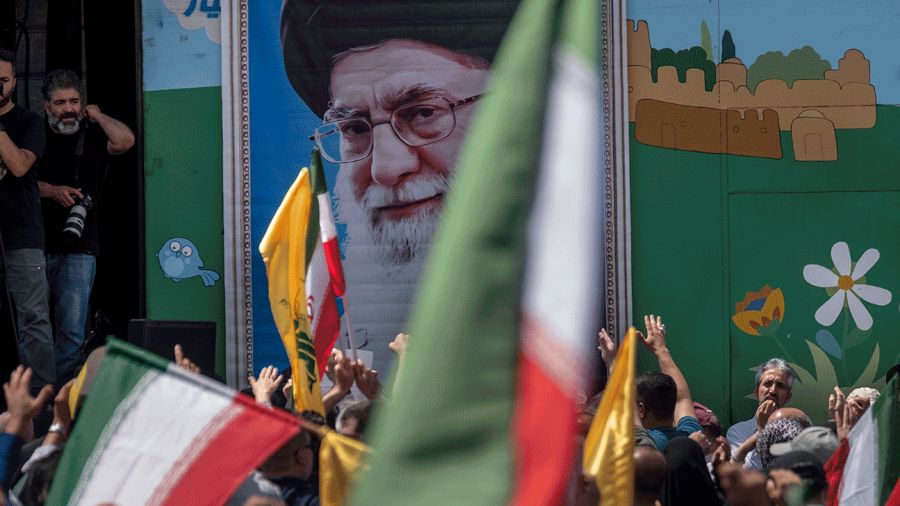
Iran’s escalating protest movement took a dramatic and violent turn on Friday as armed demonstrators engaged in direct clashes with security forces in eastern Tehran, marking one of the most serious confrontations since unrest began nearly two weeks ago. The fighting was concentrated in the Tehranpars district, where repeated bursts of gunfire rang out for several minutes amid chaotic scenes on the streets.
Video footage captured from mobile phones shows crowds scattering, shouting anti-regime slogans, and confronting security units identified as state police and internal security forces. Protesters could be heard chanting slogans condemning Supreme Leader Ayatollah Ali Khamenei, denouncing authoritarian rule, and calling for nationwide solidarity. The footage suggests that demonstrators were no longer relying solely on marches and chants but were actively resisting armed enforcement units.
Witnesses described an atmosphere of panic mixed with defiance, as residents fled into side streets while others stood their ground, yelling at officers and urging fellow protesters to remain united.
Saturday marked the 14th consecutive day of demonstrations, with unrest now spreading far beyond Tehran. Protest activity has been reported in roughly 190 cities and towns across the country, underscoring the depth and geographic reach of the uprising.
Human rights monitors estimate that at least 65 people have been killed since the demonstrations began, including women and children. More than 2,300 individuals have been arrested, with detention centers reportedly filling rapidly as authorities conduct mass roundups in urban and rural areas alike.
The scale of the protests suggests that public anger has moved beyond isolated incidents and into a broader revolt fueled by long-standing grievances, including political repression, economic hardship, corruption, and lack of fundamental freedoms.
As clashes intensified, Iranian authorities imposed one of the most sweeping internet shutdowns in the country’s history. Connectivity dropped to a fraction of normal levels, effectively severing communication between citizens and the outside world.
The blackout has disrupted mobile networks, fixed-line internet services, and digital banking systems, impacting daily life far beyond the protests themselves. Businesses, hospitals, and emergency services have been affected, while families have struggled to contact loved ones inside and outside the country.
Analysts say the shutdown appears designed to prevent footage of security force actions from reaching international audiences and to disrupt protesters’ ability to organize and coordinate. Limited connectivity remains near border regions, but these channels are inconsistent and unreliable.
Iranian opposition leaders abroad and dissident networks inside the country say the persistence of protests, particularly among younger demonstrators, has prevented authorities from extinguishing the uprising.
Statements released by opposition groups praised what they described as the courage of “rebellious youth,” asserting that confrontations with security forces have kept momentum alive despite heavy repression. They argue that the growing willingness of protesters to resist forcefully reflects a breaking point after decades of political suppression.
Speaking from Washington on Friday, President Donald Trump warned that Iran’s leadership is facing mounting pressure as unrest spreads into areas previously considered secure. He said developments suggest that protesters are gaining ground in cities that few expected to see sustained resistance.
Trump cautioned Iranian authorities against resorting to mass violence, warning that the United States would respond forcefully if civilians were targeted on a large scale. While ruling out ground intervention, he emphasized that any response would strike areas of strategic vulnerability.
The warning comes as international attention intensifies, with governments and human rights groups closely monitoring the situation amid fears of further bloodshed.
Reflecting the growing instability, several major international airlines have suspended flights to Iran, citing safety and operational concerns. The cancellations further isolate the country at a time when communications are already severely restricted.
The suspension of air travel has stranded travelers and disrupted trade and logistics, adding economic strain to an already volatile situation.
With armed clashes now occurring in the capital, a nationwide internet blackout in place, and mounting casualties, Iran appears to be entering a critical phase of unrest. The government’s reliance on force and information control suggests deep concern about losing authority, while protesters show increasing determination to challenge the regime despite rising risks.
As demonstrations continue and international warnings sharpen, the coming days are likely to determine whether the unrest can be contained or escalate into a broader confrontation with far-reaching consequences for Iran and the region.
