



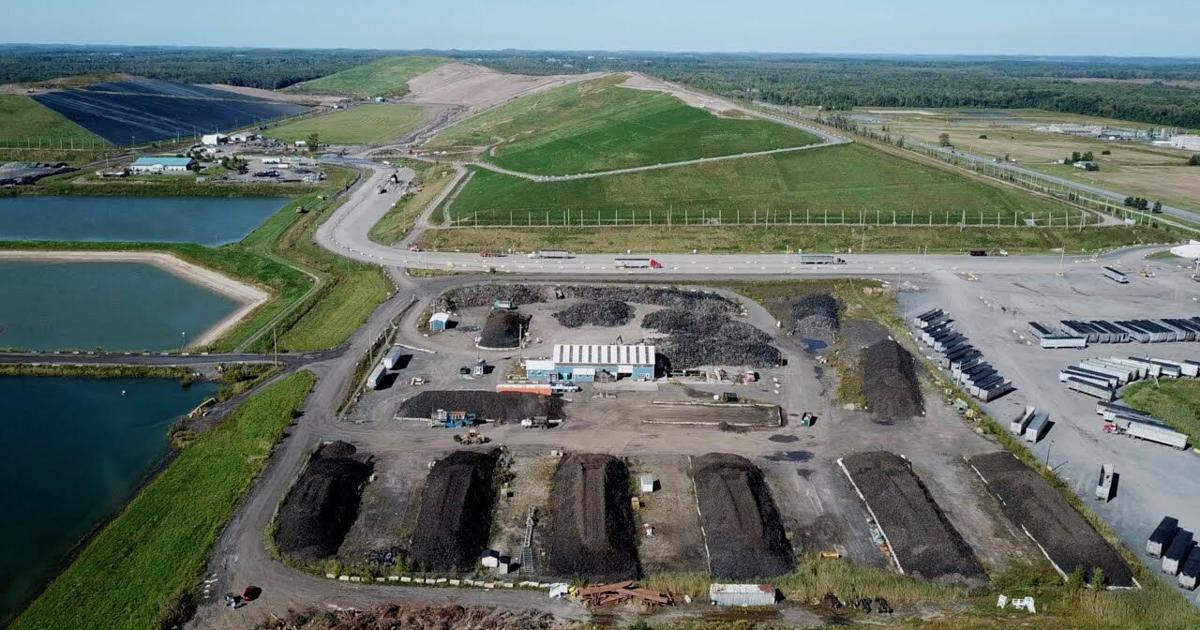
Seneca Lake Guardian says it is intensifying efforts to shut down Seneca Meadows, the largest landfill in New York State, alleging the facility is polluting drinking water and threatening public health across multiple communities.
The landfill, located in Seneca Falls, is permitted to accept up to 6,000 tons of waste per day and generate as much as 200,000 gallons of leachate daily. Leachate forms when rainwater filters through landfill waste and, according to the advocacy group, contains per- and polyfluoroalkyl substances, commonly known as PFAS or “forever chemicals.”
Seneca Lake Guardian claims the landfill exposes nearby residents to airborne particulates and gases associated with respiratory illness, asthma, and migraines, while producing odors that can be detected miles away. The group also points to recent filings with the Department of Environmental Conservation by landfill operator Waste Connections, a Texas-based company, seeking approval to expand the landfill by 47 acres through a proposed “valley infill” project and extend operations through 2040.
“Seneca Meadows landfill is poisoning our water and air, pumping a putrid odor across the region, and threatening the Finger Lakes’ $3 billion agritourism economy,” said Yvonne Taylor, vice president of Seneca Lake Guardian. “This landfill is not just impacting Seneca Falls. Millions of gallons of contaminated leachate are being discharged into communities across New York, ultimately threatening drinking water sources statewide.”
According to the group, leachate produced at Seneca Meadows is distributed to multiple municipalities, including Seneca Falls, Buffalo, Watertown, Chittenango, and communities in Steuben County. Seneca Lake Guardian cites the landfill’s 2021 annual report, which indicates that approximately 75 million gallons of leachate are generated each year. The group claims only about one-third of that volume is treated, with the remainder transported to other communities in New York and neighboring states.
The group alleges Buffalo receives nearly 44 million gallons of leachate annually, Watertown more than eight million gallons, and Chittenango more than one million gallons. It also claims that only about one percent of the waste deposited at the landfill originates from Seneca Falls, while roughly one-quarter comes from New York City and more than 12 percent comes from out of state, including waste from Massachusetts and construction debris from Connecticut. The landfill is also permitted to accept hundreds of tons of asbestos annually, according to the group.
Seneca Meadows was previously scheduled to stop accepting waste and cease operations by Dec. 31, 2025. Seneca Lake Guardian contends that Waste Connections has worked to extend the landfill’s lifespan by supporting local political candidates and proposing the valley infill expansion, which would add a seven-story-high waste structure on the site of a former industrial area and allow operations to continue until 2040.
Even if the landfill closes in 2025, the group argues that long-term environmental impacts will persist for decades due to methane emissions, leachate management, and site remediation. Seneca Lake Guardian also claims the landfill burns nearly one billion cubic feet of methane annually through flaring, contributing to climate change.
The group says the landfill’s proximity to the Cayuga-Seneca Canal and nearby schools increases risks to children and residents, while also undermining the Finger Lakes’ environmental reputation and efforts to secure a National Heritage Area designation.
Seneca Lake Guardian is calling on Governor Kathy Hochul to direct the Department of Environmental Conservation to deny expansion plans and enforce the landfill’s originally scheduled closure in 2025. The organization says continued operation conflicts with New York’s recently adopted constitutional amendment guaranteeing residents the right to clean air, clean water, and a healthy environment.
Seneca Lake Guardian is a New York State nonprofit organization dedicated to protecting the Finger Lakes region, its natural resources, and the communities and industries that depend on them.
