



Kosovo is caught in a deepening political impasse. After parliament missed a critical deadline to elect a new president, President Vjosa Osmani took the dramatic step of dissolving the legislature and calling for snap elections — a move that has rattled an already fragile region and raised the specter of renewed instability in the Western Balkans.
“It is very hard now to imagine what will happen next,” Osmani told reporters, underscoring the gravity of a crisis that has paralyzed governance for more than a year.
Friday’s presidential election session collapsed before it even began. The assembly was 14 members short of the quorum needed to proceed, after opposition lawmakers staged a boycott over Prime Minister Albin Kurti‘s chosen candidate: Glauk Konjufca, Kosovo’s Minister of Foreign Affairs and Diaspora.
The opposition’s refusal was not simply procedural. It reflected a deeper fracture between Kurti’s Vetevendosje movement — which won December’s snap elections but lacked sufficient coalition support — and rival parties unwilling to hand the prime minister a key institutional victory.
Osmani met separately with opposition leaders on Friday. Kurti, notably, did not attend. The prime minister publicly insisted that a third failed round of voting should have occurred before parliament could legally be dissolved — a position his party has now taken to the Constitutional Court, requesting a review of whether the dissolution was constitutionally valid.
A Crisis More Than a Year in the Making
This is not a sudden rupture. Kosovo’s parliament has been mired in stalemate since at least February 2025, when a vote failed to produce a functioning government. December’s snap elections handed Vetevendosje a plurality, but winning seats did not translate into the cross-party consensus needed to seat a president.
Former Albanian Prime Minister Pandeli Majko described the situation candidly to Fox News Digital: “Kosovo needs governance and then a compromise for the election of the president.” He expressed hope that the Constitutional Court would step in to provide a legal pathway forward.
But Majko was equally blunt about the limits of simply holding more elections. Calling fresh balloting an “exhausting political crisis,” he argued the parties’ standings were unlikely to shift significantly — meaning new elections could easily reproduce the same gridlock.
Opposition leader Ramush Haradinaj has floated April 5 as a potential date for new elections. If that timeline holds, Kosovo would face its second snap vote in just a few months — an expensive and destabilizing prospect for a young democracy still working to consolidate its institutions.
The question of whether elections will actually solve anything looms large. Without a shift in the political landscape, the same parties are likely to return with similar seat counts — and similar disagreements. Kosovo’s domestic turmoil does not exist in a vacuum. The country hosts KFOR, the NATO-led peacekeeping force that has maintained stability since the 1999 war. Amid swirling speculation about a possible restructuring or reduction of that mission, the crisis carries implications well beyond Pristina’s parliament chamber.
Maj. Gen. Özkan Ulutaş, KFOR’s commander, stated in February that the United States has no plans to reduce its troop presence, with approximately 600 American soldiers currently deployed. That assurance offers some stability — but the broader uncertainty about KFOR’s future adds pressure to an already strained situation.
“Precisely because the geopolitical situation is that complex, it is important to finish this electoral process,” Osmani said, acknowledging that the international environment makes swift resolution even more urgent.
Osmani’s International Profile — and Its Domestic Significance
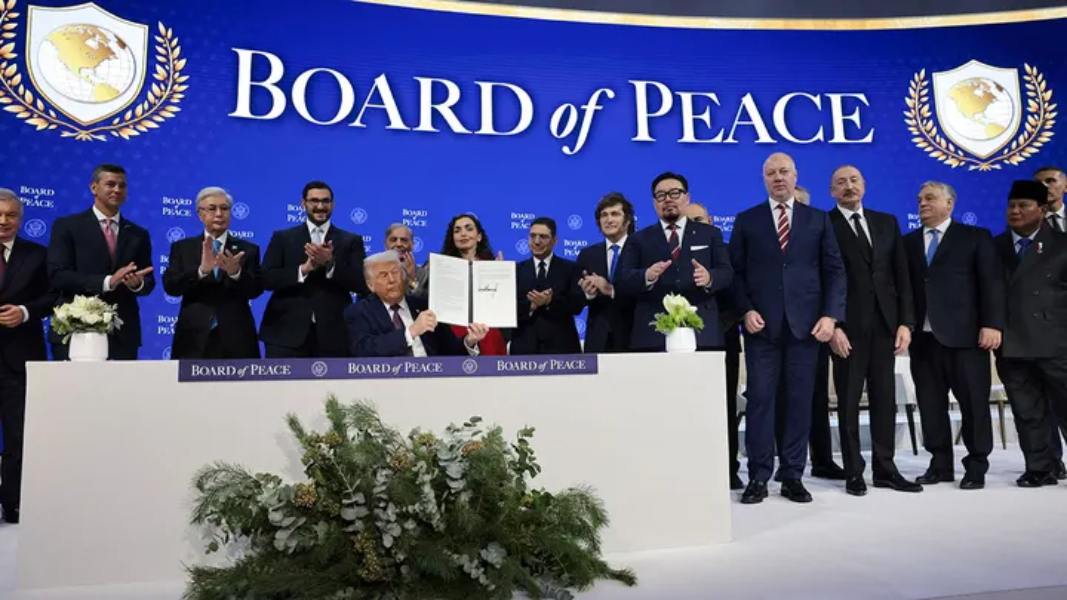
President Osmani has cultivated a notably high international profile in recent months. President Donald Trump praised her in a February speech, citing the “great job” she is doing leading Kosovo. In January, she accepted Trump’s invitation to join the Board of Peace, an initiative aimed at resolving global conflicts. She has also pledged Kosovo’s resources to the International Stabilization Force for Gaza.
That proximity to Washington could prove valuable as Kosovo navigates its constitutional crisis — or it could complicate domestic politics, depending on how voters respond to the country’s alignment with U.S. foreign policy initiatives. Any political crisis in Kosovo unfolds against the backdrop of its unresolved relationship with Serbia. Kosovo declared independence from Serbia in 2008, but tensions between the two countries have never fully subsided. Renewed domestic instability could provide openings for external actors — including Belgrade — to apply pressure or exploit divisions.
The combination of an internal constitutional dispute, a potentially restructured NATO mission, and unresolved relations with Serbia makes this one of the most complex moments Kosovo has faced since independence. All eyes now turn to the Constitutional Court, which must weigh Kurti’s appeal before any electoral calendar can be firmly set. If the court upholds the dissolution, snap elections will proceed. If it rules otherwise, the political crisis enters yet another unpredictable chapter.
What is clear is that Kosovo cannot afford prolonged uncertainty. The country needs functioning institutions — and fast.
