



What unfolded in Shreveport, Louisiana on Sunday morning is among the most devastating domestic violence incidents in recent American memory — a methodical, multi-scene attack that left eight children dead, two women shot, and an entire city trying to process a grief that its leaders described as unlike anything they had ever encountered.
Shreveport Police identified Shamar Elkins as the gunman. He was shot and killed by law enforcement later that day following a vehicle chase into neighboring Bossier Parish. He did not survive to face charges. His victims did not survive at all.
The violence unfolded across multiple locations in the early hours of Sunday.
According to Shreveport Police Department Corporal Christopher Bordelon, Elkins first shot an adult woman on Harrison Street before traveling to a residence in the 300 block of West 79th Street — where eight children between the approximate ages of 1 and 14 were killed inside the home.
Investigators say seven of the eight children are believed to have been Elkins’ own. The mother of his children was also shot at the scene. She is expected to survive. A second adult woman was shot and is suffering life-threatening injuries. A teenage victim sustained injuries described as non-life-threatening.
After the shooting, Elkins fled. He carjacked a man at gunpoint near the intersection of Linwood Avenue and West 79th Street. Shreveport officers located the vehicle and initiated a pursuit that crossed into Bossier Parish. The chase ended in Bossier City, where officers confronted Elkins and shot him dead. No officers were injured.
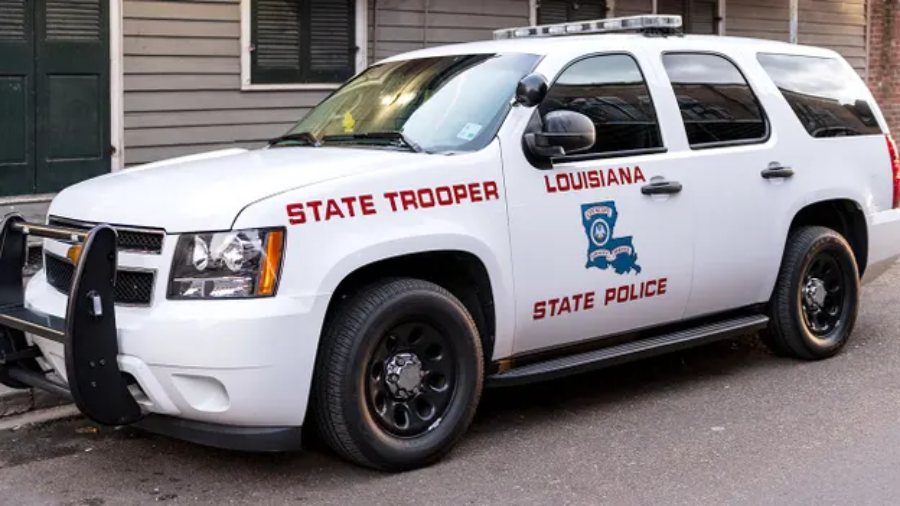
Louisiana State Police assumed responsibility for the investigation into the officer-involved shooting. Shreveport Police are leading the homicide investigation and have asked anyone with information, photos, or video to come forward.
Who Elkins Was
Elkins had a military background. An Army official confirmed to Fox News Digital that he served in the Louisiana Army National Guard from August 2013 to August 2020, first as a Signal Support System Specialist and later as a Fire Support Specialist. He had no deployment and left the service as a private.
His path from military service to Sunday’s violence is now the subject of intense scrutiny — particularly as community members and state officials have suggested that warning signs may have existed well before the attack.
“We More Than Doubled Our Homicides in One Act”
The scale of the loss was impossible for Shreveport’s leadership to absorb without confronting it directly.
Councilman Grayson Boucher put the numerical reality into stark terms.
“Over 30% of our crimes and 30% of our murders in the city of Shreveport are domestic in relation. Now, that number has gone up. We more than doubled our homicides in the city of Shreveport because of one act of domestic violence,” he said.
He described the attack as “pure evil” and warned that without systemic intervention in cycles of domestic violence, similar tragedies would follow.
“We can have 100 new police cars. We can have a brand new, beautiful multimillion dollar police substation right up the road. But until we stop this violence, the cycle of violence — we’re going to still be standing here, and it’s only going to get worse.”
Councilwoman Tabatha Taylor urged the community to take warning signs seriously and reject any minimization of domestic violence indicators.
“This is not a freaking joke. This is real. And this is the result when someone snaps,” she said.
Shreveport Police Chief Wayne Smith struggled to find words that fit the magnitude of what his officers encountered.
“I just don’t know what to say, my heart is just taken aback,” Smith said. “I cannot begin to imagine how such an event could occur.”
[Suggested Link: Domestic violence resources — National Domestic Violence Hotline 1-800-799-7233]
Warning Signs That Went Unaddressed
Louisiana State Sen. Sam L. Jenkins, Jr. arrived at the scene Sunday and raised a question that community members had already been asking: were there warning signs — and did anyone act on them?
“I’m very concerned that we are not, maybe keeping a closer track on people who have had some history of domestic violence, and offering them some kind of treatment,” Jenkins told local station KTAL. “Maybe events like this would be less occurring if we began to make that an important part of the follow up.”
He said community members had prior concerns about Elkins.
“They knew of this gentleman. They felt like he had had some tendencies or some events that had happened before,” Jenkins said, adding that he hoped “some lessons could be learned going in the future.”
A Behavioral Expert’s Analysis
Retired Supervisory FBI Agent Jason Pack told Fox News Digital that the attack followed what behavioral specialists call a “pathway to violence” — a process that develops gradually over time rather than erupting without warning.
In domestic familicide cases, Pack explained, the pathway typically begins with a deeply felt grievance — a separation, a custody dispute, or a perceived humiliation — that the individual obsesses over until it becomes the organizing principle of his thinking.
“He stops trying to resolve it and starts feeding it,” Pack said, describing how offenders construct an internal narrative in which they are the victim and those around them are the cause of their suffering. Over time, the people closest to them are no longer experienced as individuals — they are seen as extensions of the problem.
“It did not go that morning,” Pack said of the moral barrier that prevents most people from committing violence. “It went quietly, over time.”
Pack said the sequence that followed the shooting — the carjacking, the police chase, the final confrontation — was consistent with what investigators often describe as “suicide by cop.”
“He had already decided he was not coming back,” Pack said.
Investigators are now working across four separate crime scenes, with the two adult shooting survivors expected to play a central role in reconstructing what warning signs, if any, preceded the attack.
National and State Response
House Speaker Mike Johnson, a Louisiana native, addressed the tragedy on X.
“Heartbreaking tragedy in Shreveport this morning — 8 children were senselessly killed and multiple others were injured,” Johnson wrote. “We’re holding the victims, their families and loved ones, and our Shreveport community close in our thoughts and prayers during this incredibly difficult time. And we are grateful to the Shreveport, Bossier, and Louisiana State Police for their swift response.”
Eight children are dead in Shreveport. The youngest was approximately one year old. The oldest was approximately fourteen. Most of them were, by all accounts, the children of the man who killed them. That fact — perhaps the most incomprehensible dimension of an already incomprehensible event — is what officials, community members, and first responders are left to carry in the days ahead. Councilman Boucher’s warning may be the most honest summary of where this leaves a city and a country: “We’re going to still be standing here, and it’s only going to get worse” — unless the cycles that produce moments like this one are finally interrupted before the next warning sign goes unheeded.
