



In the aftermath of recent U.S. military action in Caracas, much of the political conversation has moved quickly to Venezuela’s oil and what role the United States might play in its future. The tone of that discussion often assumes Washington now has decisive control over the country’s energy sector. That assumption is far from settled, and the direction being proposed carries serious risks.
Venezuela’s oil reserves are vast, among the largest in the world, and have largely been closed to U.S. companies for more than a decade. If American firms are to regain access, there are fundamentally two paths forward.
One option mirrors how oil development works in market economies. Private companies would choose whether to invest, risk their own capital, manage their own operations, and work within Venezuela’s legal framework without being directed by the state. This is the same model used in the United States, where government grants permits or leases land but does not run drilling operations or bankroll them.
The alternative is far more troubling. Under this approach, the U.S. government would help finance oil development, guide investment decisions, and dictate production timelines. Companies would be reimbursed by the state once oil revenue flows. This would amount to government-directed energy development, blurring the line between private enterprise and state control.
Recent statements suggest this second option is gaining traction. The idea of rapid oil production, backed by government reimbursement and political oversight, echoes the very system that destroyed Venezuela’s energy sector in the first place.
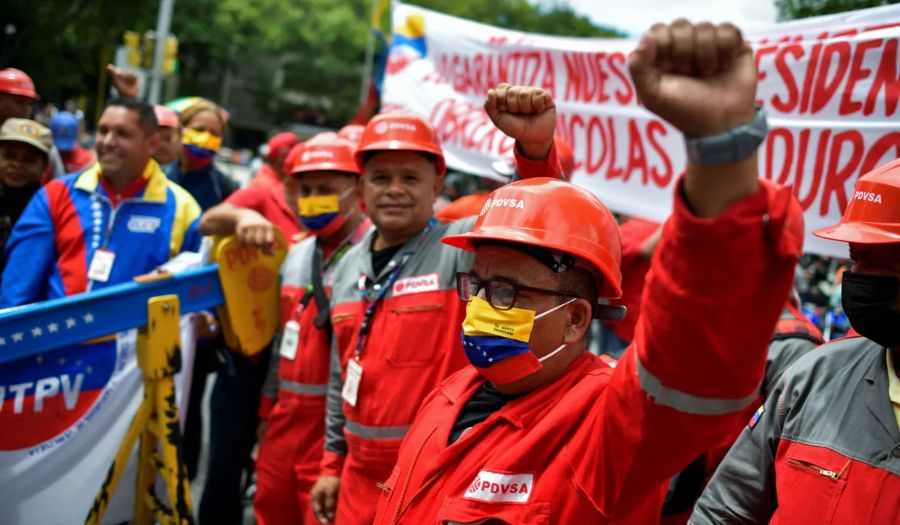
For decades, Venezuela’s oil industry has been dominated by a single state-owned enterprise. That company became less an energy producer and more a political tool, diverting revenue into government projects, rewarding loyalty over expertise, and insulating itself from market discipline. The result was predictable: collapsing production, crumbling infrastructure, rampant corruption, and a once-dominant industry reduced to a shell of its former self.
Nationalized industries rarely fail because of a lack of natural resources. They fail because political priorities replace profit, accountability, and efficiency. When losses are covered by the state and competition is eliminated, there is little incentive to maintain assets, innovate, or manage costs. Venezuela’s oil collapse is a textbook case of this dynamic.
By contrast, the U.S. oil sector thrives precisely because it is not centrally managed. Companies operate independently, compete openly, attract private investment, and respond to market signals. Even underground resources are often privately owned, creating strong incentives for responsible development. That system, not government planning, made the United States the world’s leading oil producer.
There is a temptation among policymakers to believe state coordination can accelerate results or serve geopolitical goals. But history shows that heavy government involvement in industry, whether through direct ownership or indirect control via subsidies and mandates, erodes productivity over time. What begins as a temporary intervention often becomes permanent dependence.
If Venezuela’s oil industry is to recover with U.S. participation, it should be rebuilt on market principles, not political command. Private companies should decide where to invest, how much to spend, and whether the risks are worth taking. Governments should set fair rules and then step back.
Replacing one nationalized oil system with another, even a softer version administered from Washington, would repeat the mistakes that led Venezuela into crisis. A free, competitive, privately driven energy sector is not just America’s strength; it is the only model with a proven record of long-term success.
