



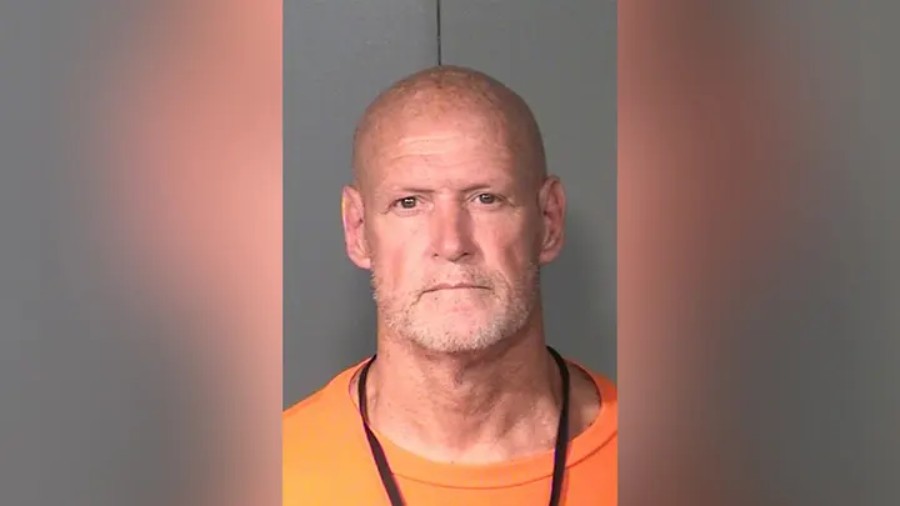
Arizona carried out the execution of Leroy Dean McGill on Wednesday, putting the convicted murderer to death by lethal injection for the brutal 2002 killing of James Perez in Phoenix. McGill, 53, was pronounced dead at 10:26 a.m. PDT at the Arizona State Prison Complex in Florence.
The execution marked the first of three executions scheduled in the United States this week, according to the original report. It also became the 12th execution carried out in the U.S. this year.
McGill was convicted of murdering Perez after prosecutors said he poured gasoline on Perez and Perez’s girlfriend, Nova Banta, while they were sitting on a couch inside a north Phoenix apartment.
Authorities said McGill had been using methamphetamine and had gone several days without sleep before the attack. After dousing both victims with gasoline, prosecutors said he set them on fire.
Banta survived. Perez later died from his injuries.
During the trial, Banta testified that McGill warned the pair not to “talk behind people’s backs” shortly before the attack. Investigators said both victims ran from the apartment after being set on fire.
Another resident helped put out the flames on Banta using a blanket. She suffered third-degree burns across most of her body, while Perez died at a hospital after enduring severe pain from his injuries.
What Happened During the Arizona Execution
Witnesses described McGill as calm in the moments before the lethal injection began. According to the report, he looked toward witnesses, smiled, nodded and said, “I’m going home soon.”
Officials administered pentobarbital, Arizona’s lethal injection drug under its current execution protocol. Witnesses said McGill began breathing heavily and made a sound described as snoring before he was pronounced dead nearly 21 minutes after the IV was inserted.
John Barcello, deputy director of the Arizona Department of Corrections, Rehabilitation and Reentry, said the procedure went as planned. He also said McGill’s final words were: “I just want to thank everyone for being so accommodating and nice.”
Arizona’s execution process has faced scrutiny in the past, including criticism in 2022 after officials had difficulty inserting IV lines during another lethal injection.
In McGill’s case, witnesses reported no visible issue with the IV placement. Sean Rice, a media witness from KPNX, said he did not see any problem finding a vein on either arm. He also noted a slight twitch on the right side of McGill’s head about four minutes before McGill was declared dead.
Arizona Attorney General Kris Mayes, whose office supported allowing the execution to move forward, said she was thinking of the victims and their families after McGill’s death.
Conviction, Sentencing and Final Legal Efforts
A jury convicted McGill in October 2004 of first-degree murder in Perez’s death. Jurors also found him guilty of attempted murder in the attack on Banta, along with arson and endangerment charges tied to other residents who escaped after the fire spread to a nearby apartment.
During sentencing, defense lawyers asked jurors to spare McGill’s life. They cited childhood abuse, mental deficiencies and emotional immaturity.
The jury imposed the death penalty.
Earlier this year, McGill’s attorneys tried to reopen the sentencing phase in an effort to stop the execution. A lower court rejected that request, and the Arizona Supreme Court later declined to delay the execution.
McGill also declined an interview request from The Associated Press and waived his right to seek clemency.
Arizona resumed executions in 2022 after nearly eight years without carrying one out. That pause followed problems obtaining lethal injection drugs and renewed scrutiny after the 2014 execution of Joseph Wood, who gasped and snorted repeatedly for about two hours after receiving 15 doses of a two-drug combination.
The state last carried out executions in 2025, when it put Richard Kenneth Djerf and Aaron Gunches to death in separate cases.
Under Arizona’s current protocol, officials administer two syringes of pentobarbital, described in the original report as a powerful sedative.
The Arizona execution of Leroy Dean McGill closes a decades-long criminal case tied to the killing of James Perez and the severe injuries suffered by Nova Banta. For state officials, the procedure moved forward after court challenges failed and clemency was waived.
For victims’ families, death penalty cases remain deeply personal. For the wider public, McGill’s execution adds another chapter to Arizona’s long-running and closely watched use of capital punishment.
