



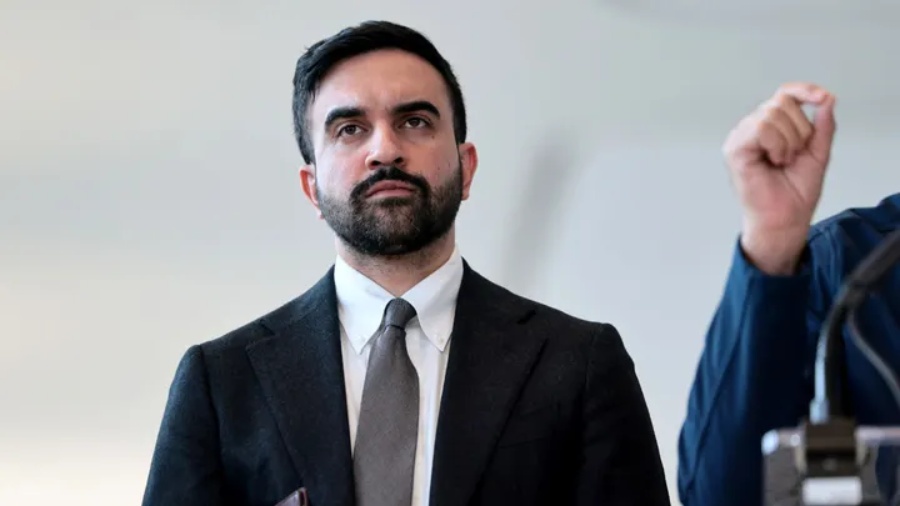
On his first day in office, New York City Mayor Zohran Mamdani made a promise: within 100 days, he would release a citywide racial equity plan. On Monday, he delivered it — and within hours, the federal government was already signaling it had questions.
The “Preliminary Citywide Racial Equity Plan” is an expansive policy framework addressing racial disparities across housing, education, income, health, and public safety. Its release fulfilled a campaign commitment. It also reignited one of the most contested policy debates in American civic life: whether government initiatives explicitly designed around race are a necessary corrective to systemic inequality — or a form of discrimination in their own right.
Mamdani’s office described the plan as the first time any New York City administration has formally required major municipal agencies to examine their work through a racial equity lens — and to identify and work to eliminate measurable disparities in outcomes.
The scope is substantial. The framework spans seven policy domains: Children, Youth, Older Adults and Families; Economy; Housing and Preservation; Infrastructure and Environment; Health and Wellbeing; Community Safety, Rights and Accountability; and Good Governance and Inclusive Decision-Making.
To pursue those goals, the plan outlines more than 200 agency-level objectives, supported by over 800 proposed strategies and approximately 600 performance indicators designed to track progress over time.
The report documents significant disparities between racial groups in New York City — including a notable gap in median net worth between white and Black households, and lower life expectancy among Black New Yorkers — and frames the plan as a structural response to those documented inequities.
“The True Cost of Living Measure offers an honest account of what it actually costs to live in this city — and who is being left behind,” Mamdani said in Monday’s press release. “Black and Latino New Yorkers — who have been pushed out of this city for decades — are bearing the brunt. The Preliminary Racial Equity Plan is where we begin to reverse that pattern.”
He connected the racial equity initiative directly to the city’s broader affordability crisis.
“We cannot tackle systemic racial inequity without confronting the affordability crisis head-on, and we cannot solve the cost-of-living crisis without dismantling systemic racial inequity,” the mayor said.
The Federal Government Weighs In
The plan had barely been public for hours before the Trump administration’s Justice Department made its position known.
Harmeet Dhillon, the DOJ’s Assistant Attorney General for Civil Rights, posted a pointed response on X: “Sounds fishy/illegal. Will review!”
The comment signals that the administration — which has made the dismantling of race-based government programs a stated priority since taking office — is prepared to examine whether Mamdani’s plan crosses legal lines under federal civil rights law or equal protection standards.
The DOJ did not immediately provide a formal comment to Fox News Digital beyond Dhillon’s public post.
Conservative Reaction Online
Beyond the DOJ, the plan drew immediate and sharp criticism from conservative commentators across social media.
The account Libs of TikTok called the initiative “straight-up racism against White people.” Conservative commentator Paul A. Szypula described Mamdani as “implementing blatantly racist policies that reward and punish people based on their skin color.”
Fox News Digital reached out to both Mamdani’s office and the DOJ for formal comment. Neither had responded at time of publication.
Monday’s release is not the first time Mamdani’s approach to racial equity has generated significant political friction.
During his mayoral campaign, Mamdani drew criticism for a tax policy proposal — titled “Stop the Squeeze on NYC Homeowners” — which described plans to “shift the tax burden from overtaxed homeowners in the outer boroughs to more expensive homes in richer and Whiter neighborhoods.” The explicit racial framing of that tax language drew sharp scrutiny at the time.
In February, Mamdani faced additional pushback over his budget allocations for the city’s racial equity infrastructure. His proposed spending assigned $5.6 million annually to the Office of Racial Equity and $4.6 million to the Commission on Racial Equity — a combined $10.2 million, representing a roughly 42% increase over the approximately $7.2 million allocated the previous year.
The NYC Chief Equity Officer and Commissioner of the Mayor’s Office of Equity & Racial Justice, Afua Atta-Mensah, defended the approach in Monday’s release.
“Inequity has been embedded in the foundation of our city and nation since their inception; dismantling it requires a collective effort,” Atta-Mensah said. “This plan outlines measurable goals and actionable strategies to advance racial equity, promote justice and create lasting change.”
Mayor Mamdani’s Preliminary Citywide Racial Equity Plan represents one of the most ambitious — and most politically combustible — policy rollouts of any major American city in recent memory. With more than 800 proposed strategies, a $10.2 million annual equity budget, and a federal government that has made opposing race-based initiatives a cornerstone of its agenda, the collision course between City Hall and Washington appears set. Whether the DOJ’s review produces formal legal action, or whether the plan advances through the city’s agency structure largely intact, will define one of the sharpest flashpoints in New York City politics in the months ahead.
