



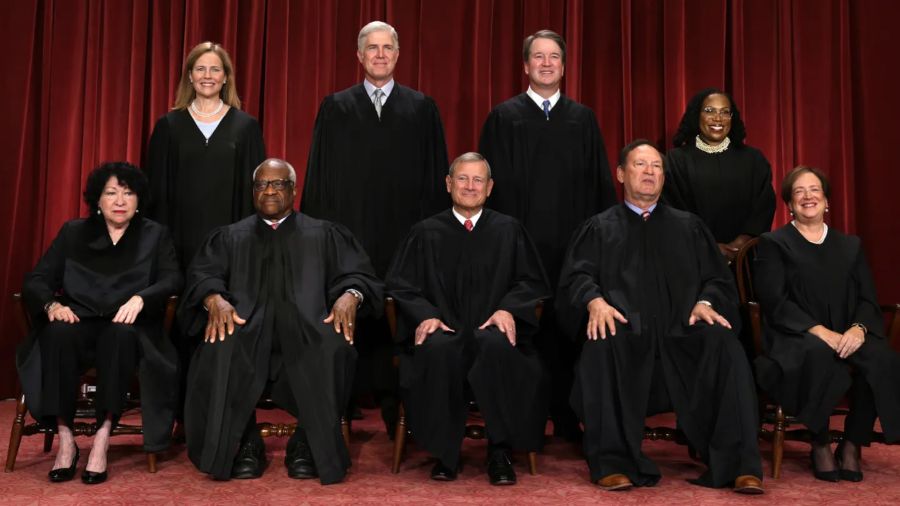
The U.S. Supreme Court has agreed to review a Republican-backed legal challenge that could significantly alter how political parties fund federal election campaigns, a decision with potentially far-reaching consequences for future U.S. elections.
The case was brought by Republican campaign organizations challenging long-standing federal limits on how much political parties may spend in direct support of their candidates. Among the plaintiffs is a former Senate candidate who has since risen to national office, adding to the case’s political significance.
At the center of the dispute is whether federal restrictions on party spending violate the First Amendment’s protections for political speech and association. Republican committees argue that current rules prevent parties from fully supporting their own nominees, even though those candidates represent the party’s platform and values.
The challengers maintain that political parties should have the same freedom as outside political groups to spend money advocating for their candidates, arguing that limits unfairly restrict core political expression.
Potential Impact on Election Law
If the Supreme Court rules in favor of the Republican committees, the decision could weaken key portions of federal campaign finance law that have been in place for more than five decades. Those laws were designed to curb corruption and prevent excessive influence in elections by capping coordinated spending between candidates and party organizations.
A ruling striking down the limits could dramatically increase the role of political parties in financing campaigns, particularly in high-cost Senate and House races.
Federal election spending has reached historic levels in recent election cycles, with billions of dollars flowing into presidential and congressional races. Supporters of the challenge argue that existing laws are outdated and fail to reflect the modern campaign environment, where outside groups already spend heavily with limited restrictions.
Critics counter that loosening party spending limits could accelerate an arms race in campaign fundraising and further tilt elections toward wealthy donors and influential political organizations.
Government Takes Unusual Position
In a notable move, the executive branch has chosen to support the Republican challengers rather than defend the federal law. This places the administration at odds with congressional Democrats, who are stepping in to argue that the restrictions are constitutional and necessary to preserve fair elections.
Such a stance is rare, as the federal government typically defends laws passed by Congress, regardless of political leadership.
The case will be argued before the Supreme Court during its upcoming term, with oral arguments expected in the fall. Given the Court’s current conservative majority, the outcome could mark another major shift in U.S. campaign finance law.
If the limits are struck down, political parties may soon gain far greater influence over campaign spending, potentially reshaping the balance of power in American elections for years to come.
